Showing posts with label cinema. Show all posts

A good year in Turkish cinema, but for who?


Turkish movies have been winning awards at major international film festivals from Berlin and Montreal to Sarajevo and Dubai throughout the year. Box Office numbers show that seven out of the 10 top-grossing movies are Turkish. However, the fact is that none of the movies that brought crowds to theaters are award-winners

It’s been both a record year and a bizarre year for Turkish cinema. In September, an unknown Turkish name won the Lion of the Future award at the Venice International Film Festival. Director and writer Ali Aydın made many proud with Küf (Mold), his debut feature and a poetic look at a father’s loss.

Then there were the award-sweepers like Emin Alper’s Tepenin Ardı (Beyond the Hill) and Reis Çelik’s Lal Gece (Night of Silence), hitting the news with new awards at international film festivals all through the year. Another happy piece of news for Turkish cinephiles came two weeks ago when Turkish auteur Zeki Demirkubuz’s Yeraltı (Inside) won the Best Film and Best Actor awards in the Dubai International Film Festival.

Box Office Turkey’s numbers for 2012 is another success story for Turkish cinema, setting yet another record with seven out of 10 movies among the most-watched films being Turkish films. These all seem consistent at first glance, serving as testament to a wonderful year for Turkish cinema. While it was truly a wonderful year for Turkish cinema, at home at the box office and abroad in international film circles, there is still a catch.

None of the seven films that drew crowds to movie theaters in 2012 are the above award winners or others that wowed the audience from Tokyo and Sarajevo to Abu Dhabi and Montreal. The top three most-watched movies, according to Box Office Turkey, have attracted more than 10 million viewers, one out of seven people in Turkey.

Click here for full article (Hürriyet Daily News)

Can Turkish artists be international figures?

Turkish actress Saadet Işıl Aksoy’s recent screen time with Penelope Cruz brings to mind the age-old question in Turkish pop culture: How is it that when Turkish directors and writers win awards in major international film festivals, there are only a handful international film stars from Turkey?

Turkish actress Saadet Işıl Aksoy won the Best Actress award at the Sarajevo Film Festival five years ago with her debut feature Yumurta (Egg), the first film in director Semih Kaplanoğlu’s Yusuf trilogy. Now, the same city means something altogether different in her rise to international stardom.

Aksoy stars in Italian director Sergio Castellitto’s Venuto al mondo (Born Twice), which takes place in Sarajevo. Featuring an international cast including Penelope Cruz, Emile Hirsch, Jane Birkin and Mira Furlan.

Having made its premiere last September at the Toronto International Film Festival, Venuto al mondo has now been released in Turkish theaters. The film, as well as Aksoy’s small but powerful role as the surrogate mother, has received good reviews. Aksoy also made headlines this week in the Turkish media, thanks to her role sharing the screen with Penelope Cruz, Spanish director Pedro Almodovar’s muse and the former love interest of Tom Cruise.

Click here for full article (Hürriyet Daily News)

Attack of the vampires in Turkey’s popular culture


Famous villain in Turkish history books, Vlad the Impaler inspires the Western culture but vampires have long passed their due date in Turkish culture

The last decade has seen vampires rise once again from their coffins. With the final movie in the epic teen vampire saga Twilight hitting theaters recently, along with cult-favorite TV shows like The Vampire Diaries and True Blood, there are plenty of examples around us. Vampires, in fact, have always been on the loose throughout the last century in Western culture, going back into their coffins occasionally only to wake up even hungrier.

With the vampire craze not losing any steam for decades, it’s quite surprising to see that the existence of original vampires in Turkish pop culture is next to none. Especially when you go back to the origins of vampires in Western fiction. The horror novel that opened the way to a plethora of fascinating blood-sucking characters in the decades to come was Irish writer Bram Stoker’s Dracula.

The inspiration behind the 1897 Gothic novel was Vlad III, the prince of Wallachia in Eastern Europe in the 15th century. Known posthumously as Vlad the Impaler, the ruler was known for his brand of cruelty across Europe, which included impaling his enemies. Vlad’s ultimate enemy was the Ottomans, hence depictions of his endless cruelty made history books, securing his reputation as one of the biggest villains in Turkey’s collective consciousness.

One would expect a whole list of inspired vampire stories from Turkish writers, filmmakers and cartoonists. Bizarrely, there are less than a dozen with hardly any that could be called inspired. The most recent example is this week’s release Laz Vampir: Tirakula, taking history as its cue but foraying into cheap laughs with outdated clichés.

Click here for full article (Hürriyet Daily News)

Turkish cinema asks: Which human rights?


Celebrating global Human Rights Day, here is a look at human rights violations in recent history with a brief journey through Turkish cinema. Hunger strikes, political prisoners, war in southeastern Turkey and disappearances in custody are some of the subjects of these films

Today is Human Rights Day across the globe, the day we celebrate the proclamation and adoption of the Universal Declaration of Human Rights. For many in Turkey there isn’t all that much to celebrate these days considering the hunger strikes, imprisoned journalists, disappearances in custody and a growing perception that the rule of law is no longer the norm.

Perhaps the best way to take a look at human rights in Turkey - or rather the violation of human rights - is to remember some of the feature films and documentaries that have brought some of these violations into the spotlight in recent memory.

The obvious first choice is journalist Ruhi Karadağ’s documentary Simurg (Simurgh), currently on release in theaters. The film focuses on hunger strikes, an issue that recently made the news, although the recent hunger strikes were different to the ones shown in the movie. What’s more, the recent ones did not end up with an infamous operation in which police and soldiers broke into prisons to halt the strikes.

Click here for full article (Hürriyet Daily News)

Festival on Wheels, spreading love of cinema


“In its 18th year, Festival on Wheels is still a force to be reckoned with. Its humbleness continues to be coupled with its tireless fight against the system,” the famous film critic Alin Taşçıyan recently wrote. “Wherever the festival travels to, it takes pleasure in becoming part of that city, creating a new audience in each city.”

Beginning its 18th journey Nov. 30, the Festival on Wheels is much more than your regular film festival. It has been the place where generation after generation in distant parts of Turkey have had the magical chance to watch their first film on screen, it has helped cities open their very first movie theaters and provided the public with the chance to interact with filmmakers themselves.

The festival first hit the road in the winter of 1995, kicking off in Ankara then heading to İstanbul, İzmir and Eskişehir for a month. During its 17-year run, Festival on Wheels shared the love of cinema with 19 cities from Sinop in the north to İzmir in the west and the eastern city of Kars, even visiting some neighboring countries like Azerbaijan, Bosnia and Herzegovina, Georgia and Greece.

“By the festival’s 13th year, we had made one tour around the globe,” said Ahmet Boyacıoğlu, General Secretary of the Ankara Cinema Association, which has organized the festival for nearly two decades now. In 2003 and 2004, Festival on Wheels traveled to six cities in one go. “In 2004, it took 17 hours for us to travel from Van to Kayseri, making us realize how vast this country actually is.” He recalled how enthusiastic the audience was to experience the world of cinema in a way they never had before – some for the first time. Festival Director Başak Emre remembers “a woman among the audience in Artvin watching Lars von Trier’s Europa, knitting all throughout the film’s run.”

Click here for full article (Hürriyet Daily News)

Documentary looks at a legend’s trio

A new documentary by young director Okan Avcı follows Turkish music legend Erkan Oğur’s trio, Telvin, their unconventional improvisations on stage, and conversations about their free-flowing music offstage

In classical Sufism, or Tasavvuf, the word telvin means a seeker’s quest to journey from one state of being to another. And if you begin the word with a capital letter, it becomes a musical trio from Turkey whose music is inspired by the literal meaning of the word.

Erkan Oğur is a musical legend in Turkey and around the world. He is the inventor of the first fretless classical guitar and is a master of kopuz and bağlama lutes. A virtuoso at reinventing Turkish folk music, Oğur is also one of the members of the Telvin trio, along with İlkin Deniz and Turgut Alp Bekoğlu.

Much like the transcendent journey the word refers to, Telvin’s music embodies a free-flowing style, blending Turkish folk music with improvisational jazz, refusing structured performances and predefined mechanics in making music. A new documentary, available with English subtitles on DVD, brings to light the inspirations behind their music, the unconventional working dynamics of the members, and how nature is a guiding light in their work.

The documentary Telvin is at once an unconventional tour video and an inspirational tribute by a devoted fan. The young director is Okan Avcı, familiar to some thanks to his roles in TV series (Leyla ile Mecnun) and movies (Nefes – Breath), and to others with his award-winning documentary of 2011, Kadim (Venerable).

Click here for full article (Hürriyet Daily News)

Incest: The last taboo in Turkish cinema and TV

The recent controversy around a Turkish film dealing with incest reminded many of a similar brouhaha over another film on incest two years ago, as well as Deputy Prime Minister Bülent Arınç’s warning to TV producers to keep incest away from screens

Red flags were raised amid media delirium last week when the head of the jury for a national film festival openly condemned a movie on moral grounds, allegedly threatening to ban the movie from entering the national competition.

The festival was the Golden Orange Film Festival, the biggest one in Turkey. The head of the jury was the ever-controversial Hülya Avşar, who had made headlines in the summer when a member of the jury resigned in protest over her selection, questioning her judgment and knowledge of film.

The film, which became the most talked-about film of the festival, was director Çağatay Tosun’s sophomore feature Derin Düşün-ce (a word play that could mean “Deep Thought” or “When Derin Falls,” referring to the little protagonist’s name). And the controversial subject matter was incest, a no-go area in Turkish cinema, television, literature and pop culture.

At the film’s center is the 8-year-old girl, Derin. Growing up in a broken, dysfunctional family, Derin knows nothing about being a child. After her mother’s death, she tries connecting with her father in every possible way, which includes encounters with sexual undertones. At the film’s premiere, some of the audience apparently went berserk, with some accusing Tosun’s film of “bordering on child porn.”

Click here for the article (Hürriyet Daily News)

Turkish documentaries expose environmental mishaps

As Turkish-German director Fatih Akın’s anticipated environmental documentary, ‘Polluting Paradise,’ hits the theaters, we take a look at other recent Turkish documentaries that hope to expose potential ecological disasters in Turkey

Following a special screening at this year’s Cannes, another one at the recent Golden Boll Film Festival and a showing in front of a Turkish audience at the hip film fest Filmekimi, Turkish-German director Fatih Akın’s anticipated documentary, Polluting Paradise (Der Müll im Garten Eden), hits theaters this week.

The paradise in question is Akın’s hometown, Çamburnu, a small mountainous town along the eastern shores of the Black Sea. The beautiful environment and its nature were threatened when the former copper mine right above the village was turned into a garbage landfill for the entire province of Trabzon by the government in 2007.

Akın learned about the potential environmental disaster when he was filming scenes for his 2007 feature Auf der Anderen Seite (Edge of Heaven). In Polluting the Paradise, he documents the struggles of the residents and those working in the landfill over a period of five years, as well as the impact of the garbage on the streams, not to mention an overpowering stench in the area.

The film is less an objective documentary and more a passionate plea to stop the impending environmental catastrophe for the town and its people. And it seems that Akın’s plea seems to be working.

Click here for full article (Hürriyet Daily News)

Surge of films on Gallipoli Campaign


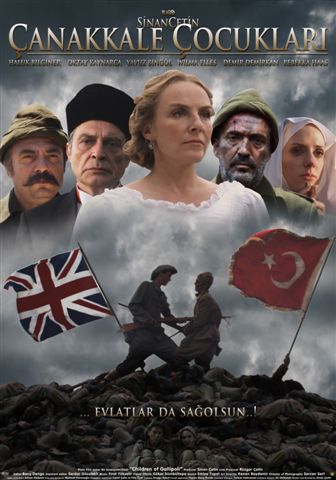
This week’s release of ‘Çanakkale Çocukları’ (The Children of Gallipoli) is just the beginning of a surge of films focusing on the Gallipoli Campaign of 1915

The Gallipoli Campaign, or the Battle of Çanakkale, is at once one of the most tragic battles of the 20th century and one of the greatest victories of modern Turkey. The attack of the Allied Forces in World War I to capture the Dardanelles, (the Çanakkale Strait), resulted in a huge defeat and lead to the death of more than 130,000 Turkish, British, French, Australian, New Zealand and Indian troops in eight months.

The campaign helped the Turks regain a confidence that would eventually inspire the Turkish War of Independence and the founding of modern Turkey eight years later. The centenary of the Gallipoli Campaign is just around the corner, and moviemakers look set to cash in on the nationalist tendencies invading Turkish cinema and TV screens in recent years.

Most of the recent historical dramas are examples of crude nationalism, most clearly seen in the recent box office smash Fetih 1453 (Conquest 1453) - an epic tale of the Ottoman conquest of Constantinople - or the hit TV series Muhteşem Yüzyıl (Magnificent Century), depicting the power games in the 16th century court of Süleyman the Magnificent. Even the upcoming adaptation of the 1960s comic book Karaoğlan features a young Turkic hero during the reign of Genghis Khan in 12th century Central Asia.

It is therefore no surprise that a big production on the Gallipoli Campaign is hitting theaters this week and another is on its way in less than a month. Çanakkale Çocukları (Children of Gallipoli) is directed by popular filmmaker Sinan Çetin. More a one-man-show than an auteur, Çetin directs, produces, writes and is the cinematographer of the war drama, while his wife and two sons star.

Click here for full article (Hürriyet Daily News)

1980 coup, in the eyes of filmmakers

It is over three decades since the military overthrow of the Turkish government on Sept 12, 1980, but the repercussions have been inspiring filmmakers ever since

This week marks the 32nd anniversary of the 1980 coup, which kick started a military regime that would put 7,000 people in prison, execute 50, and have all opposition silenced for a long time to come.

The Sept. 12, 1980 coup also inaugurated a period when Turkish cinema was silenced almost into non-existence, even going as far as to the burning of rolls of films. Arrests and imprisonments were common, with movie stars such as Tarık Akan and filmmakers such as Şerif Gören and Ömer Uğur serving their fair share of prison time.

Featuring the coup and its aftermath as the subject of a movie was unthinkable in the early 1980s. However, with filmmakers living through the direct consequences of the oppressive regime, the coup eventually became a regular subject. Now, a new movie exploring the coup and its aftermath hits the theaters every couple of years.

The first feature film to deal directly with the haunting effects of the coup was Zeki Ökten’s Ses (The Voice) of 1986. The film starred Tarık Akan as a young man who moves to a coastal town to start a new life after spending years in prison. Akan himself became familiar with prison life in the years following the coup.

Click here for full article (Hürriyet Daily News)

Film takes a haunting look at arranged marriages

‘Lal Gece’ (Night of Silence), director and writer Reis Çelik’s Crystal Bear winner in this year’s Berlinale, hits theaters this week. Most of the story taking place in the bridal chamber, the film is a haunting look at arranged marriages in Turkey. ‘Lal Gece’ is a one of many in a string of Turkish films on arranged marriages


A young adolescent girl locked in a room to have sex against her will with a much older man would be the definition of rape in many countries. Yet in some parts of rural Turkey it is merely standard procedure for a traditional arranged marriage.

Reis Çelik’s latest feature and Crystal Bear winner in this year’s Berlin International Film Festival Lal Gece (Night of Silence) follows a traditional arranged wedding in which the 60-something-year old groom is sent off to the bridal chamber with his 14-year-old bride to consummate the marriage by sunrise the next day.

The marriage is an arrangement to end the blood feud between two families and the groom, played by veteran actor İlyas Salman, has spent most of his life in prison for the murder, done as an honor killing, of his mother. The film’s director and writer Çelik layers in a look at another patriarchal tradition accepted in certain rural parts of Turkey with the addition of the groom’s honor killing to the plot. The young bride, played by newcomer Dilan Aksüt, is a fresh-faced teenager under her bright red wedding veil.

Click here for full article (Hürriyet Daily News)
Acclaimed filmmaker Kutluğ Ataman funds next film via web

Acclaimed filmmaker and contemporary artist Kutluğ Ataman may have advanced to the next stage in arts funding for his new film, ‘South Facing Wall’: crowd funding


When South Facing Wall, the fifth feature film by globally recognized Turkish filmmaker and contemporary artist Kutluğ Ataman, hits the theaters some time next year, there will be at least 153 individual funders proudly watching the film, some who have contributed 2,000 dollars, others merely two dollars.

Ataman has chosen Kickstarter, the U.S. crowd funding website for creative projects, as a major source for his upcoming movie, which will be filmed in the eastern province of Erzincan. The contributions from individual film aficionados will go directly to funding development and pre-production, help the production team shape the project from rewriting and research and include other aspects like location scouting and production design.

When you check the Kickstarter page for the project, you won’t see much on the filming details, nor about the cast and the crew. What you will see is a detailed account of the film, the story, and how the funding will work, including a five-minute video of Ataman himself talking about what he wants to achieve with his film.

“I want to make a film that talks about the everyday lives of individuals who live here and have not found proper representation in Turkish cinema,” Ataman says in the video to the potential (and hopefully actual) funders, referring to the people of eastern Anatolia.

Click here for full article (Hürriyet Daily News)

Karaoğlan, Turkish comic book hero returns to screen

Karaoğlan, the famous comic book hero of the 1960s, makes a comeback in the upcoming film, directed by Kudret Sabancı. The young Turkic warrior will once again fight his archenemy, Mongol leader Camoka, in the film to be released next January


Nationalist sentiments continue their invasion of Turkish pop culture as another Turkish hero saves Anatolia, this time from the Mongols. With some blatant and crude nationalism in recent Turkish cinema like the box office hit Fetih 1453 (Conquest 1453) and the action series Kurtlar Vadisi (The Valley of the Wolves), the news of the upcoming adventures of a Turkish hero on screen stirred quite some excitement last week.

Karaoğlan, veteran cartoonist Suat Yalaz’s beloved comic book hero, is getting ready for his screen comeback, riding his horse in the vast film set in Kemerburgaz in northern Istanbul. The hero is a young Turkic adventurer in his early 20s, and the literal translation of his name is the Swarthy Boy, referring to his trademark dark locks. The setting is 12th- and 13th-century Central Asia during the reign of Genghis Khan.

Karaoğlan was one of the most popular Turkish comic book heroes of the 1960s, dubbed the Heroes with Swords, all of them inspired by motifs from the histories and folklore of Turks, as well as Islam. The historic comic book heroes proved to be the darling of pop culture at the time, with more than 50 heroes hitting the stands at one time.

Click here for full article (Hürriyet Daily News)

Death by technology in film

Two new releases this week demonstrate the changing face of fear of technology in movies. While an ATM booth, mobile phones and cameras betray humans in one horror flick, in another a power outage becomes the ultimate source of horror. Here’s a look at technophobia in movies, which goes as far back as the early 1920s

Forwarding a private email to your boss could be the ultimate horror story. You might also harbor anxiety over someone tagging you on Facebook. Online shopping can be as scary, if you’ve heard stories of people’s credit cards being hacked. In fact, sometimes computers and emails, TV sets and credit cards can be much scarier than haunted houses, monstrous sharks, and psycho killers – at least on screen.

Two of this week’s new releases play on our anxieties about changing technology and our dependence on it. In director David Brooks’s ATM, three friends stop by an ATM booth to withdraw some cash, only to find themselves trapped in the ATM and their lives threatened by a hooded man waiting to kill them. While technology becomes a threat to their lives, it is also technology that offers them the chance of escape, in the form of mobile phones and cameras – which perhaps also let them down, fuelling even more fear of technology.

In Alexandre CourtèsThe Incident (released with the title Asylum Blackout in some countries), a group of unsuspecting people are stuck in a prison-like building with the criminally insane when a thunderstorm causes a blackout. Something as simple as a malfunction in electricity becomes the source of true horror in this French-American horror movie.

The fear of technology and its reflection in art, more specifically in fiction, is as old as, well, technology.

Click here for full article (Hürriyet Daily News)
Orientalist look from Hollywood

Previous attempts by the Culture and Tourism Ministry to lure foreign film productions to Turkey may have created a bias, producing a history of films depicting Turks, Turkey and Istanbul through an Orientalist perspective for half a century


“It is evident that cinema makes a big contribution to tourism,” Culture and Tourism Minister Ertuğrul Günay said in a June 13 meeting at Istanbul’s Kadir Has University, which brought together representatives from the Ministry and the Turkish cinema sector.

The meeting was convened to kick-start work on the new Turkish cinema draft law, the first seen since 2004. Set to be included in the new draft law will the establishment of a platform to provide support to foreign films shot in Turkey. Günay said, “We already do our best [to support] such productions, but we think that it would be easier to appear in the world market if we collaborate with a foreign film company.”

Günay has in fact been flirting with a system to increase foreign film productions in Turkey for some time now. Building sets and stages devoted to foreign film productions is one of the projects he has proposed. An incentive system is another.

Last year, he met with producers of the upcoming James Bond movie Skyfall, to make known his enthusiasm to have many of the film’s scenes filmed in Turkey. The production team, including current James Bond actor, Daniel Craig, were in Turkey earlier this year to film scenes at Istanbul’s Sultanahmet Square, Hagia Sophia, the coastal town of Fethiye, and the historic Varda Railway Bridge close to the southern city of Adana.

Click here for full article (Hürriyet Daily News)

Controversy starts early at Golden Oranges

As is the custom with Turkey’s biggest cinema event, the Golden Orange Film Festival, controversy around the national competition has begun taking the media by storm. This time, the contention has started early

What’s Turkey’s biggest cinema event, the Golden Orange Film Festival, without the anticipated controversy? There might be two months left until the festival kicks off in October, but the heat came early this year with the announcement of the jury for the national competition last week.

Cinema, competition and controversy have been running hand in hand in the southern province of Antalya almost every autumn for half a century now. The biggest cinema event in Turkey has been mocked and praised and courted and shunned for varying reasons throughout the course of its history.

But the true controversy has always centered on the national competition. Since the early days of the festival, the category has been much more than a competition. The selection of the films, the selection of the jury and the handing out of the awards, together with their aftermath, have always managed to steal the headlines away from any celebration of cinema.

Click here for full article (Hürriyet Daily News)

Turkish films shine in Venice line-up

Absent at the Venice International Film Fest for two decades, Turkish cinema has become a regular fixture in the festival over the last four years. This year’s line up includes three movies from Turkish filmmakers Here’s a look at the journey of Turkish cinema in Venice over the past four years


With less than a month before the 69th Venice International Film Festival kicks off, the line-up has been announced, surprising moviegoers with only a few of the expected overlaps with the Toronto Film Festival. The festival will open with The Reluctant Fundamentalist by Mira Nair, one of the 20 female directors who are going to be debuting their work this year.

The list of films to be screened at the festival came as good news for Turkey, with internationally-acclaimed female director Yeşim Ustaoğlu’s Araf (Somewhere in Between) included into the Orrizonti (Horizons) section, and director Ali Aydın’s debut feature Küf (Mold) competing for the Lion of the Future award, an award won two years ago by another Turkish director’s debut feature, Seren Yüce’s Çoğunluk (Majority).

The inclusion of the two films in the line-up made headlines last weekend, but there was another success story by two other Turkish filmmakers. One of the films to be screened in the Giornate degli Autori (Venice Days) section of the festival is Inheritance, a joint production between Israel, France and Turkey. The film is the directorial debut of Palestinian actress Hiam Abbass, renowned for her roles in such films as Satin Rouge, Dawn of the World, and Amreeka. The two Turkish names from among the producers are Faruk Özerten and Ender Sevim. Özerten has channeled his skills to producing after having worked in the U.S. as an assistant director and a producer for one of the episodes of the short-lived TV series Missing, starring Ashley Judd.

Click here for full article (Hürriyet Daily News)

Turkey and Greece unite on screen

The recent collaborations between Greek and Turkish filmmakers are an increasing interest on the part of Turkish moviegoers in cinema. This year’s edition of Documentarist, devotes a section to Greek - Turkish relations.
Celebrating its fifth year, Documentarist, Istanbul’s Documentary Days, is preparing to bring moviegoers face to face with the harsh realities of today (and yesterday) as seen through the eyes of nearly 100 filmmakers. This year’s festival, taking place between June 1-6, features a section devoted to Greece and the difficult times it has experienced in the last couple of years.

The section “Our Nextdoor Neighbor Greece” is the latest example in a string of collaborations between Turkey and Greece, as well as a growing interest in each other’s work both in film and TV. The sometimes-troubled relationship between the neighbors seems to have taken a friendly turn in the past couple of years, at least as seen through the camera.

In this year’s Documentarist, one can see examples from Greek cinema that shed a harsh light on the tough times of the recent past. Myrna Tsapa’s Katinoula of 2012 is a candid look at an elderly woman of Greek origin living in Egypt. Directors Chyrysa Tzelepi and Tania Hatzigeorgiou’s film, 25th Meridien, which took five years to complete, follows the lives of the few remaining Greek residents on the largest Turkish island in the Aegean, Gökçeada, or Imbros.

Click here for full article (Hürriyet Daily News)

‘The Dictator’: When racist replaces racy

Once one of the best comedians in the world and a crusader fighting the ignorance, prejudice and vacuousness of political correctness, Sacha Baron Cohen has given in to Hollywood mechanics. ‘The Dictator’ is at best a mediocre comedy

When Borat Sagdiyev, Kazakhstan’s sixth best journalist and one of the many alteregos of British comedian Sacha Baron Cohen, led the unsuspecting American patrons of a Country West Club to sing along to Throw the Jew Down the Well on screen in 2006, it was time to revisit the boundaries of comedy, and realize that we actually live in a very controlled environment when it comes to humor.

Borat: Cultural Learnings of America for Make Benefit Glorious Nation of Kazakhstan was a mockumentary, a collection of pranks spread over a journey from New York to California. Borat and his producer traveled throughout the “U.S. and A,” to make a documentary on America or to find Pamela Anderson and make her Borat’s wife, whichever story you chose to follow.

The initial reaction to Cohen’s comedy was simple strain, before deciding whether to laugh or not. You had to laugh, because the pranks were funny, and the timing was spot on. And when you let yourself go, and started to feel comfortable laughing at all the misogynistic, anti-Semitic, homophobic and racist jokes, there was an unexpected sense of liberation. You could be a woman, Jewish or gay. It didn’t matter. In the hands of a masterful comedian who played on people’s ignorance and prejudice, political correctness crumbled into pieces.

Click here for full article (Hürriyet Daily News)

Films tackle honor killings

‘Ateşin Düştüğü Yer’ (Where the Flame Falls) takes a father and his 17-year-old pregnant daughter on a road trip, where the father prepares to execute the unsuspecting daughter
According to numbers released by a rights organizations and compiled from the press, about one woman every day was killed by a family member, husband, ex-husband or partner in Turkey last year.

Government figures are even more drastic, suggesting murders of women have increased ten-fold in the last decade, from 66 in 2002 to around 1,000 each year over the last few years. Thousands are victims of the cultural and social oxymoron of “honor killings.”

Honor killings have always been a major problem in Turkey, especially in the rural areas of eastern and southeastern Turkey. Until quite recently, Turkish law tended to be lenient to honor killers, with many sentences reduced through claims of “provocation.” Thanks to women’s NGOs, devoted followers of the problem in the media, and the country’s quest to enter the European Union, honor killings were deemed a scarlet letter against Turkey, eventually leading to the introduction of a mandatory life sentence for those found guilty of the crime seven years ago.

Click here for full article (Hürriyet Daily News)

Related Posts with Thumbnails